
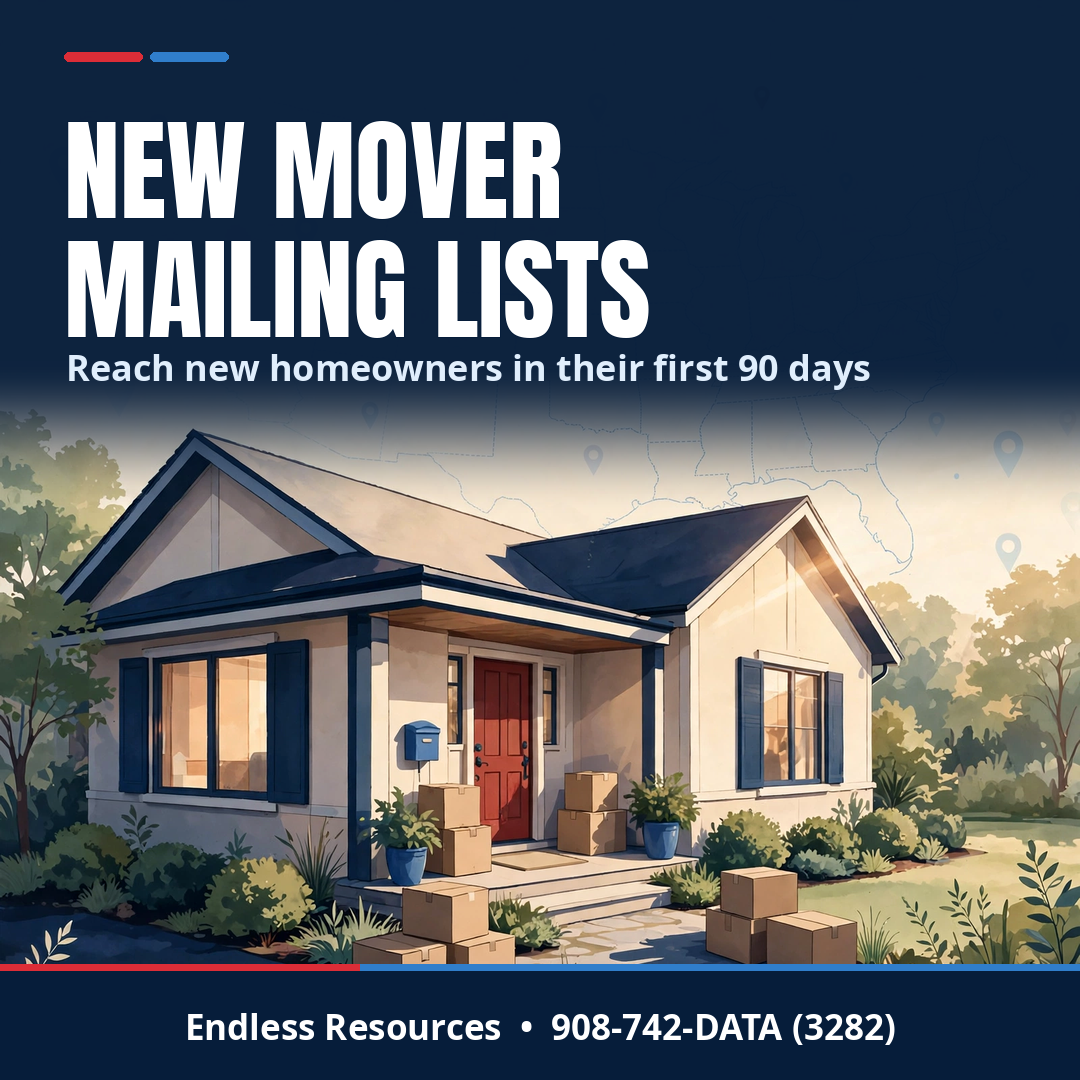
What Is a New Mover Mailing List?
If you are asking what is a new mover mailing list, the short answer is this: it is a list of names and mailing addresses for households that have recently moved into a new home, usually in the last 30, 60, or 90 days. It includes both people who bought a home and people who rented one, in the area you choose, so you can mail a welcome offer while they are still picking new local businesses.
That timing is the whole value of a new mover mailing list. A household that just moved has to find a new dentist, grocery store, hair salon, and help for cleaning, repairs, insurance, and home services. They have no loyalty to your competitor yet. Mail that arrives in the first few weeks can become their first call. See the service page for new movers mailing lists and pre-mover lists for selections, formats, and how ordering works.
How a new mover mailing list works
Providers build these lists from several sources. Common sources include change of address filings, recorded deed transfers, new utility connections, and compiled consumer databases that track length of residence. No single source catches every move, which is why good lists use more than one.
You choose the geography first, such as ZIP codes, a city, or a radius around your location. Then you choose how recent the move should be, and whether you want homeowners, renters, or both. You can also add selects such as age, income range, or home value where available. The provider runs a count, and you decide if it fits your budget before you order.
Treat this as a recurring list, not a one time list. New households arrive every week, so most businesses pull a fresh file every month and mail to each new group soon after they arrive. A list from six months ago is not a new mover list anymore.
What it costs and what drives the cost
New mover lists are usually priced per record, and they cost more than a basic consumer list because the data has to be refreshed often. Published 2026 pricing guides put new mover and other trigger lists roughly in the range of 10 to 25 cents per record for the data alone, with some providers charging a flat rate per thousand names and a minimum order. Printing, design, and postage are separate, and they are usually the larger part of the total campaign cost.
Three things move the price the most. The first is freshness: a weekly feed costs more than a monthly file, because the households are closer to their move date. The second is targeting: adding selects adds a small charge per record. The third is use rights and added fields: one time use costs less than multiple uses, and adding a phone number or email address costs extra per record.
For a small local business, the math is usually monthly and modest. You are buying only the new households in the ZIP codes you serve, each month, while your offer is still timely.
What to watch out for
First, ask how recent new really is. One provider may mean moved in the last 30 days, another in the last 12 months. Those are very different lists. Ask for the move date window and how often the file is updated.
Second, ask how the addresses were cleaned. Look for address standardization, duplicate removal, and checking against change of address records. A cheap list that has not been cleaned can waste postage on duplicates and old addresses.
Third, do not confuse new movers with new homeowners. Every new homeowner is a new mover, but not every new mover bought a home. If you sell home services, insurance, or security, homeowners may be the right fit. If you run a restaurant, gym, or salon that renters also use, you probably want both groups.
Fourth, mail fast and follow up. A welcome offer works best in the first weeks, and a second piece a few weeks later often does better than one piece alone.
How Endless Resources handles it
Endless Resources has been in business for 23+ years, with access to more than 75,000 lists, 135M consumer records, and 20M+ businesses. You tell us the area you serve and whether you want new homeowners, new renters, or both, and we run the count by ZIP code, city, or radius, with the move date window you choose.
We show you the count and price before you order, and help you adjust the area or window until it fits your monthly budget. The file is cleaned before delivery, with duplicates removed and addresses standardized. We can refresh the count each month so your mailing stays current.
Frequently asked questions
What is the difference between a new mover list and a new homeowner list?
A new mover list includes everyone at a new address, renters as well as owners. A new homeowner list keeps only the people who bought a home. Home services, insurance, and security companies often prefer homeowners, while restaurants, shops, and personal services usually want both.
How much does a new mover mailing list cost?
Cost depends on how fresh the data is, how much targeting you add, and how many records are in your area. Published guides put many new mover lists at about 10 to 25 cents per record for the data, often with a minimum order, and print and postage are extra. A free count for your exact area gives you a real number before you spend anything.
How do you get a mailing list of new movers?
You work with a list provider, set your geography and move date window, and get a count and quote for the households that match. The provider compiles the list from change of address filings, deed records, and utility connections, cleans it, and delivers it ready for your printer or mail house.
Get a free list count
Get a free list count for your next campaign, with no obligation. Call 908-742-DATA (3282) or visit https://data.endlessresources.com/.
Related reading
How to Build a Mailing List for Direct Mail
Originally published on LinkedIn: https://www.linkedin.com/pulse/what-new-mover-mailing-list-endless-resources-inc--15tkc/
